
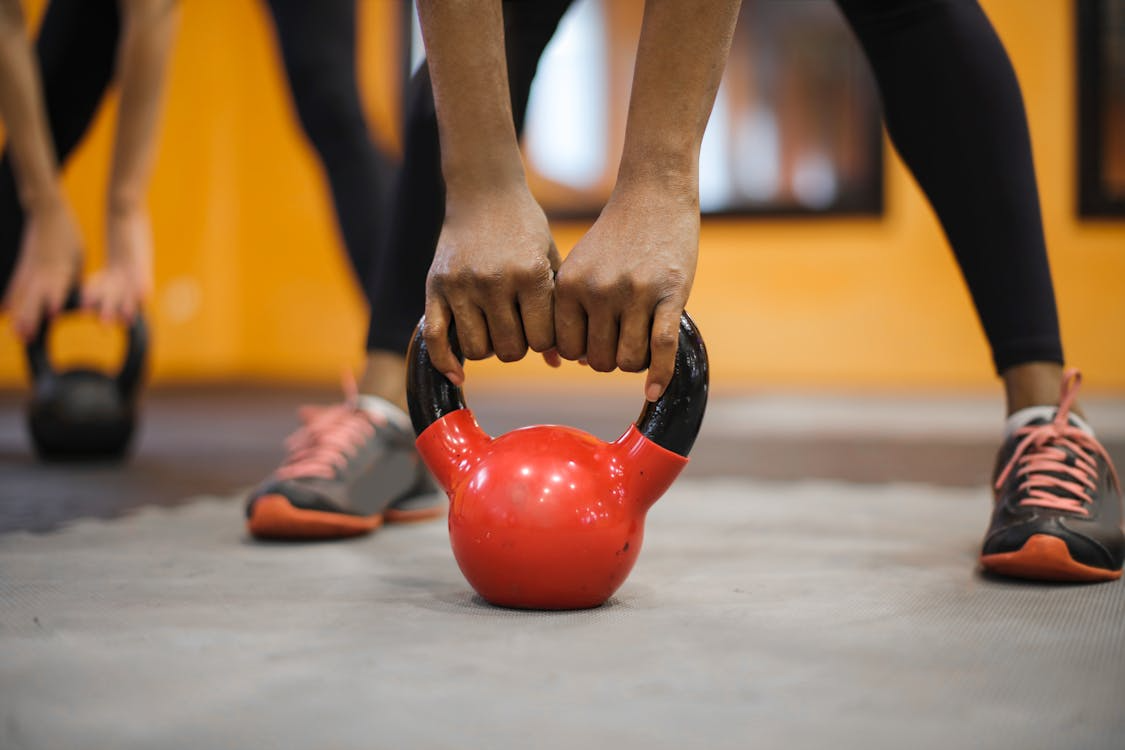

I have watched the same thing happen for close to twenty years of coaching. Someone picks up a kettlebell, trains hard for six or eight weeks, sees real change, then somewhere around the third month the progress thins out and the bell starts living in a corner. The story they tell themselves is usually about motivation. They think they lost discipline, or that kettlebells stopped working. In my experience that explanation is almost always wrong. What stalls around month three is rarely effort. It is structure, recovery, and a set of expectations that went uncorrected at the start. Fix those and the plateau turns back into progress. Here is what is actually going on, and what to do about each part.
Your body adapts, and that is the point
The first reason for the stall is the most predictable, and it is not a flaw in your training. It is the training working. When you start something new, your body responds quickly. Coordination improves, the nervous system gets more efficient, and you can handle load you could not manage in week one. Those early gains feel dramatic because the gap between untrained and slightly trained is large.
The catch is that the body adapts to a fixed stimulus fast. The American College of Sports Medicine makes the point directly in its position stand on resistance training progression: adaptations to a standard, non-varied program can occur in a relatively short period, so the demand has to keep increasing if you want continued improvement.1 That is what progressive overload means, and it is wider than just adding weight. You can progress load, total volume, density (the same work in less time), range, tempo, or the complexity of the movement itself.
Take a concrete case. A beginner swinging a 16 kg bell for five sets of ten can progress without ever touching a heavier bell: tighten the rest between sets, add a sixth and seventh set, move to sets of fifteen, then bring in a heavier bell for fewer reps once the pattern is solid. Each step is a new demand. A beginner who does the identical session on repeat for three months has given the body nothing new to adapt to. Of course it stalled. It was asked the same question every week and it already knew the answer. The practical fix is to decide, before each training block, which variable you are going to push, then track it so you can see it move.
Why most beginners never get their technique checked
Most beginners never have their technique checked. They copy a short video, build a movement habit in the first few weeks, and then repeat that habit thousands of times. If the pattern was slightly off, they are now very consistent at doing it slightly wrong, and by month three a small inefficiency can become a nagging ache.
The two-hand hinge swing is a good example, because it is the swing most beginners learn first and the one most often performed poorly. When McGill and Marshall measured spine loading during kettlebell work, the hardstyle hinge swing produced lumbar compression of roughly 3,200 newtons with a 16 kg bell, with the glutes and back extensors firing in rapid bursts.2 That is a load a healthy back tolerates well, which is part of why many people credit swings with improving back function. It is also a load that depends heavily on where it goes. The same study found that swinging with one hand placed more demand on the low back than splitting the bell between two hands, which tells you that small choices in execution change the loading in ways worth taking seriously.
The most common fault I see by month three is a swing that has quietly turned into a half-squat with the arms lifting the bell. The hips stop doing the work, the shoulders take over, and the bell gets muscled up by the arms instead of driven up by hip extension. Another is the bell dropping too low on the backswing, below the knees, what some coaches loosely call letting it pendulum, which rounds the lower back under load. Neither fault announces itself on day one. Both compound quietly until something complains.
This is where naming matters, and it is something we have argued at Cavemantraining for years. People say “the swing” as if there is only one. There is the hip hinge swing, the squat-style swing, the two-hand and the one-hand versions, the Russian chest-height finish and the American overhead finish. They load the body differently and they are taught in a deliberate order for a reason. If you are not sure which one you are doing, that is the first thing to fix. We cover why the swing is not automatically a hip hinge, the difference between the hinge and squat versions, the muscles actually working through the movement, and how to perform the two-hand hinge swing step by step. Spend an hour with that material, or with a coach, before you spend another three months reinforcing a pattern you never audited.
Monotony is a programming gap, not a mindset problem
By month three a lot of people are simply bored, and they read that boredom as a personal failing. Usually it is a programming gap. Kettlebells are unusually flexible. The same handful of exercises can be loaded for maximal strength, for power, or for conditioning, depending on weight, rep scheme, pace, and rest. Most beginners tend to use only one of those settings.
You can see how far the tool stretches in the research. Falatic and colleagues took female collegiate soccer players, already trained athletes, and had them run a snatch-based interval protocol of fifteen seconds of work and fifteen seconds of rest for twenty minutes, three times a week. After four weeks their VO2max rose about six percent, while a circuit weight-training control group showed no significant change.3 That is a narrow study, in trained women, using one specific protocol, so I am not going to claim it proves kettlebells beat everything for everyone. What it shows is concrete: point the same implement at a conditioning goal with the right structure and you get a conditioning adaptation. Load it for strength instead and you get something different.
The fix for monotony is to rotate the goal every four to six weeks. A simple version: spend a block on heavy two-hand hinge swings and presses in low reps for strength, then switch to a conditioning block of higher-rep cleans or snatches on short intervals, then a power block built around explosive low-rep sets with full recovery. Same bells, three different adaptations. The variety keeps your interest, and more usefully, it keeps giving the body new questions to answer.
Recovery is where the adaptation happens
The next mistake is the opposite of quitting: training too much. Plenty of motivated beginners decide that if three sessions a week produced results, six will produce twice as many. It rarely works that way. Training is the stimulus. The adaptation, the part you actually want, happens during recovery.
Push the stimulus past what you can recover from and you get short-term overreaching, where performance dips and then rebounds if you back off. Keep pushing without enough rest and it can tip into overtraining, which a review in Sports Health describes as a maladaptive response to excessive load without adequate recovery, with effects across the nervous, hormonal, and immune systems and a drop in mood and performance that can take a long time to reverse.4
Watch for the signals that you have crossed the line: sleep getting worse rather than better, resting heart rate creeping up, sessions that used to feel sharp now feeling flat, more irritability than usual, and small niggles that linger. One or two of those in a hard week is normal. A cluster of them for a fortnight is your body telling you the math is off. You do not need to fear hard training. You need to respect the other side of it. For most people building a kettlebell habit, two or three quality sessions a week with real rest days between them will outperform daily grinding, and sleep is likely doing more for your results than another session would.
Nutrition: the input beginners skip
Recovery is not only about rest. It is also about giving the body the materials to rebuild, and protein is the one most beginners undereat. Reviewing the evidence in its position stand, the International Society of Sports Nutrition puts the useful range for most exercising people at about 1.4 to 2.0 grams of protein per kilogram of bodyweight per day, spread across the day rather than crammed into one meal.5 For an eighty kilogram person that is roughly 112 to 160 grams daily, which is more than many people eat without paying attention. Total calories matter too. If you are eating well below what you burn, recovery and progress both suffer regardless of how clean the protein is.
You do not need a complicated plan to start, and you do not need to buy anything in particular. If you want a structured starting point that puts training and eating in one place, Maxine’s offers a set of free training and nutrition guides you can download, including beginner meal plans and home or gym workout templates. Use it as a framework, then adjust the numbers to your own bodyweight and goal. The aim is to stop leaving recovery to chance. Enough protein and enough total energy is what lets the training you already did actually show up.
Building a habit that survives the stall
The last piece is the one people most often get wrong, thanks to bad pop science. You have probably heard it takes twenty-one days to build a habit. That number has no good evidence behind it. The actual research, from Lally and colleagues, followed people forming a new daily behaviour and found it took a median of about sixty-six days to become automatic, with a wide spread from eighteen days to well over two hundred depending on the person and the behaviour.6 The lesson is not the headline figure. It is that automaticity comes from repeating a behaviour in a consistent context, and that it takes longer than the internet promised, so you should expect the early effort to feel effortful for a while.
In practice that means anchoring training to a fixed cue and a realistic schedule rather than relying on motivation, which fluctuates. Same days, same time, same place. Track your sessions so the streak itself becomes something you do not want to break; a wall calendar with a mark for every session works as well as an app, and the method matters less than the visibility. A coach, a training partner, or a community keeps you honest on the days you would otherwise skip. The people still training at month six are rarely the most motivated ones. They are the ones who built a structure that did not depend on motivation.
The unglamorous summary
None of these fixes are exciting, which is probably why the quit-rate articles prefer to talk about willpower. Getting past month three comes from progressing one training variable at a time, checking that your swing pattern is the one you think it is, rotating your goal often enough to stay interested, recovering hard enough to adapt, eating enough protein to rebuild, and showing up on a schedule long enough for it to become normal. Do those things and the kettlebell does not end up in the corner. It stays in your hands, because it is still doing something for you.
References
- Ratamess, N.A., Alvar, B.A., Evetoch, T.K., Housh, T.J., Kibler, W.B., Kraemer, W.J., & Triplett, N.T. (2009). Progression models in resistance training for healthy adults [American College of Sports Medicine position stand]. Medicine & Science in Sports & Exercise, 41(3), 687–708. Link
- McGill, S.M., & Marshall, L.W. (2012). Kettlebell swing, snatch, and bottoms-up carry: back and hip muscle activation, motion, and low back loads. Journal of Strength and Conditioning Research, 26(1), 16–27. Link
- Falatic, J.A., Plato, P.A., Holder, C., Finch, D., Han, K., & Cisar, C.J. (2015). Effects of kettlebell training on aerobic capacity. Journal of Strength and Conditioning Research, 29(7), 1943–1947. Link
- Kreher, J.B., & Schwartz, J.B. (2012). Overtraining syndrome: a practical guide. Sports Health, 4(2), 128–138. Link
- Jäger, R., Kerksick, C.M., Campbell, B.I., et al. (2017). International Society of Sports Nutrition position stand: protein and exercise. Journal of the International Society of Sports Nutrition, 14:20. Link
- Lally, P., van Jaarsveld, C.H.M., Potts, H.W.W., & Wardle, J. (2010). How are habits formed: modelling habit formation in the real world. European Journal of Social Psychology, 40(6), 998–1009. Link
Resources
- Maxine’s (workout supplements for women)
- Workouts
- Courses
- Certifications
- Coaches
- Live feed

