
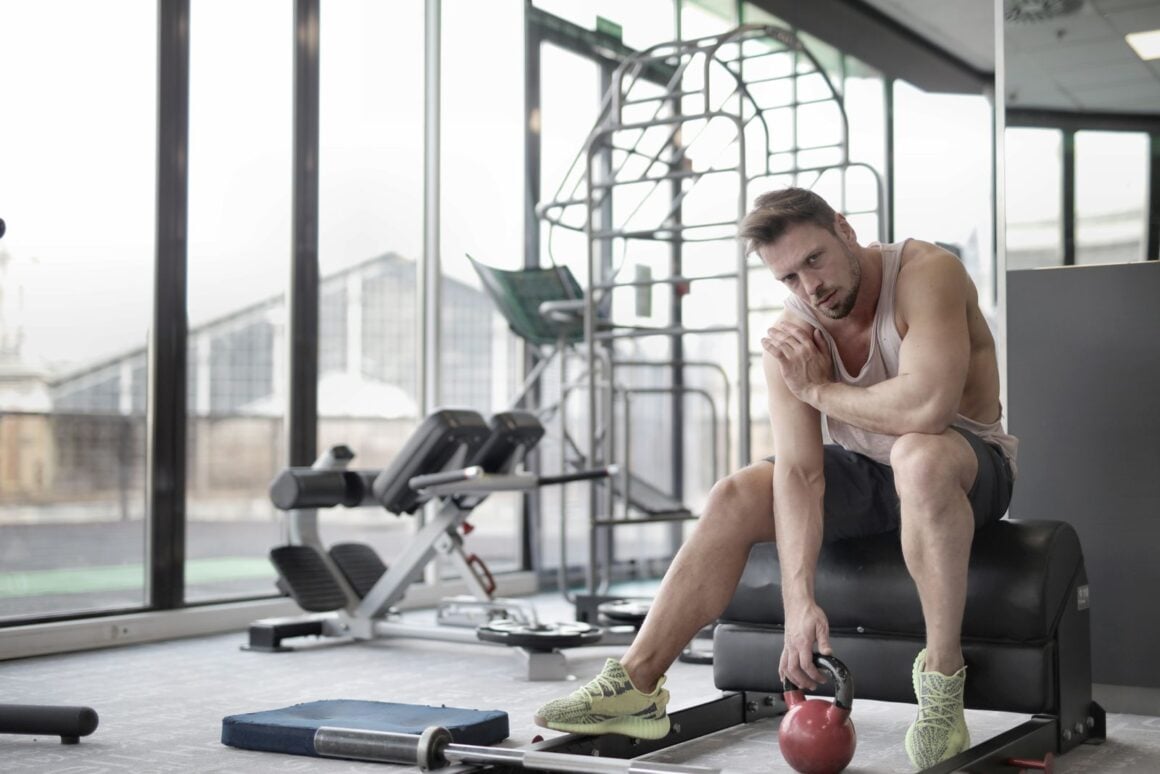

Most hydration advice comes from one of two places. Endurance sports, where athletes keep moving for hours, and weight-class sports, where the concern is making weight and then producing a few maximal efforts. Kettlebell training does not sit neatly in either. A single session can hold a heavy single-arm press, a set of explosive swings, several rounds of a complex and a ten-minute EMOM.
Those are different kinds of work, and the research on fluid loss suggests they are not affected equally. Knowing which parts of a session are most exposed tells you where losing fluid is likely to show up, and gives you something specific to check in your own training.
What the Research Measured
In 2007, Daniel Judelson and colleagues reviewed the studies on hypohydration, meaning a deficit in body water, and muscular performance.¹ Earlier results had been inconsistent, which the authors put down largely to differences in how the studies were run. Once they accounted for those differences, hypohydration appeared to reduce strength by roughly 2%, power by roughly 3% and high-intensity endurance by roughly 10%. Those effects were seen at body mass losses of around 3 to 4%,² which is a substantial deficit.
The review defines high-intensity endurance as maximal efforts lasting about 30 seconds to 2 minutes. A great deal of kettlebell training is built from efforts of exactly that length. The mechanism is still unclear, the authors note, so the figures describe what tends to happen rather than why.
A later study tested a full-body resistance session directly. Kraft and colleagues had participants complete the same resistance protocol twice: once after heat exposure with full fluid replacement, and once at about 3% body mass loss with no fluid replacement.³ In the dehydrated trial, total repetitions across all sets fell from about 169 to about 144, roughly 15% fewer. Heart rate during recovery between sets was higher, 116 against 105 beats per minute, and so was the effort participants reported before some of the sets.
Two caveats apply. The dehydration in that study was induced before training, in a hot water bath, rather than built up through the session. And for an 80 kg person, 3% is 2.4 kg of fluid, well above the 900 milliliters estimated further down for a demanding 45-minute session.
Where Kettlebell Formats Fall
These are approximate findings from studies of substantial hypohydration, generally around 3 to 4% of body mass. They are not a prediction for a normal session, and nobody has measured these specific kettlebell workouts. The review’s three categories line up with common formats like this:
| Kettlebell format | Closest category in the review | Review’s figure |
|---|---|---|
| Heavy single-arm press, slow grinding exercises | Strength | about 2% |
| Heavy swings or snatches for a few fast reps | Power | about 3% |
| One-minute snatch sets, EMOM rounds, complex rounds, 30-second to 2-minute intervals | High-intensity endurance | about 10% |
| Five- to ten-minute sets, 30- to 40-minute conditioning sessions | Outside the range the review covered | not measured |
For grinding work such as the exercises in 3 Best Grinding Kettlebell Exercises For Strength, an effect of that size may be hard to tell apart from ordinary day-to-day variation caused by sleep, food and stress.
A round of a kettlebell complex or a minute of snatches sits inside the 30-second to 2-minute window, and those formats are usually repeated many times in one session. That makes them the most exposed part of a typical kettlebell session.
The review did not cover longer efforts, such as the five- and ten-minute snatch tests, so its figures say nothing either way about them.
Why the Later Rounds Are Where It Shows
Fluid loss builds through a session. Unless you drink enough to keep pace, each round of an EMOM is done with a slightly larger deficit than the one before. Starting already short, after a hot day or a morning without much to drink, adds to it.
Kraft’s heart-rate finding is relevant to how kettlebell intervals are built. In a kettlebell EMOM workout, the rest is whatever is left of the minute once the work is done. If heart rate stays higher between efforts, as it did in the dehydrated trial, less recovery happens in that leftover time and the next round starts from further behind. The study did not test an EMOM, so treat this as an inference. If it holds, the drop would show up in the later rounds rather than the first.
Pacing, conditioning, sleep, heat, food and accumulated fatigue all produce the same late drop. Fluid loss is the one on that list you can measure with a bathroom scale.
How Big a Deficit a Normal Session Produces
Does a typical session get anywhere near those deficits? The Cavemantraining™ article on staying hydrated during high-intensity workouts works through sweat-rate figures from athletes across several sports and uses about 1.2 liters per hour as a working estimate for a demanding session. On that estimate, a 45-minute session costs around 900 milliliters, about 1.1% of body mass for an 80 kg person.
That is below the 2% level the National Athletic Trainers’ Association links to consistent performance drops in prolonged aerobic exercise,⁴ and a long way from the 3 to 4% behind the figures in the table. The gap can narrow in a longer session, in heat, when you begin already short on fluids, or when you train twice in one day.
Check It in Your Own Training
Two people doing the same session can lose very different amounts, so the useful number is your own. A bathroom scale and a training log are enough, and you do not need to dehydrate on purpose to learn anything.
Pick one repeatable format, such as a ten-round EMOM or a set number of complex rounds, and use the same kettlebell weight every time. For each session, record two things.
1. How much body mass you lost. Weigh yourself in minimal dry clothing before training and straight after. The drop in body mass is a practical estimate of your net fluid deficit; divide it by your starting weight for a percentage. To estimate your sweat rate as well, add back what you drank and subtract any urine you passed, since that weight left your body without being sweat.⁴ The full method is in the hydration article linked above.
For example: 80.0 kg before, 79.4 kg after, and 0.5 liters drunk during the session. The deficit is 0.6 kg, or 0.75% of body mass. Sweat loss is 0.6 + 0.5 = 1.1 liters, which over a 90-minute session works out to about 0.73 liters per hour.
2. How the last rounds compared with the first. Reps per round, or time per round, at the start and at the end.
After several sessions in different conditions, put the two columns side by side. If the sessions where you lost the most also show the biggest late-round drop, fluid is worth managing. If the drop stays the same whatever the scale says, look at pacing, conditioning or recovery instead.
Fit Drinking Into the Structure You Already Have
Kettlebell training already has natural places to drink: between sets of strength work, in the planned rests of a complex or interval session, and in the gaps between EMOM rounds. A 20- or 30-second gap leaves time for a few mouthfuls, so fill a bottle before you start, keep it within reach, and drink small amounts often. Polar Camel’s guide to staying hydrated on the go makes the same suggestion for the rest of the day: split your intake into several smaller servings and refill as you go.
For many normal-length sessions in mild conditions, drinking to thirst in those gaps is a sound default. A 2017 review of exercise-associated hyponatremia, a dangerous dilution of blood sodium caused mainly by drinking beyond thirst, concluded that drinking to thirst prevents it in temperate conditions for exercise lasting less than 17 hours.⁵ Long, hot or very sweaty sessions are different, and so is a second session on the same day. Your own sweat-rate numbers are the better guide there, which fits the NATA statement’s advice to base fluid intake on the individual. The same statement recommends starting exercise already hydrated.⁴
Stop training and get urgent medical help for confusion, collapse, a seizure, a severe or worsening headache, or repeated vomiting. Do not assume those are simply dehydration. Heat illness and exercise-associated hyponatremia can look alike, and both need assessing in person.
What to Change
Keep water within reach, start hard or hot sessions hydrated, and use the scale check if your late rounds keep dropping. A few weeks of that log will show whether fluid loss is part of the problem.
References
- Judelson DA, Maresh CM, Anderson JM, Armstrong LE, Casa DJ, Kraemer WJ, Volek JS. Hydration and muscular performance: does fluid balance affect strength, power and high-intensity endurance? Sports Med. 2007;37(10):907–921. https://doi.org/10.2165/00007256-200737100-00006
- Shirreffs SM. Hydration, fluids and performance. Proc Nutr Soc. 2009;68(1):17–22. https://doi.org/10.1017/S002966510800877X
- Kraft JA, Green JM, Bishop PA, Richardson MT, Neggers YH, Leeper JD. Impact of dehydration on a full body resistance exercise protocol. Eur J Appl Physiol. 2010;109(2):259–267. https://doi.org/10.1007/s00421-009-1348-3
- McDermott BP, Anderson SA, Armstrong LE, Casa DJ, Cheuvront SN, Cooper L, et al. National Athletic Trainers’ Association Position Statement: Fluid Replacement for the Physically Active. J Athl Train. 2017;52(9):877–895. https://doi.org/10.4085/1062-6050-52.9.02
- Hew-Butler T, Loi V, Pani A, Rosner MH. Exercise-associated hyponatremia: 2017 update. Front Med. 2017;4:21. https://doi.org/10.3389/fmed.2017.00021
- Workouts
- Courses
- Certifications
- Coaches
- Live feed


