
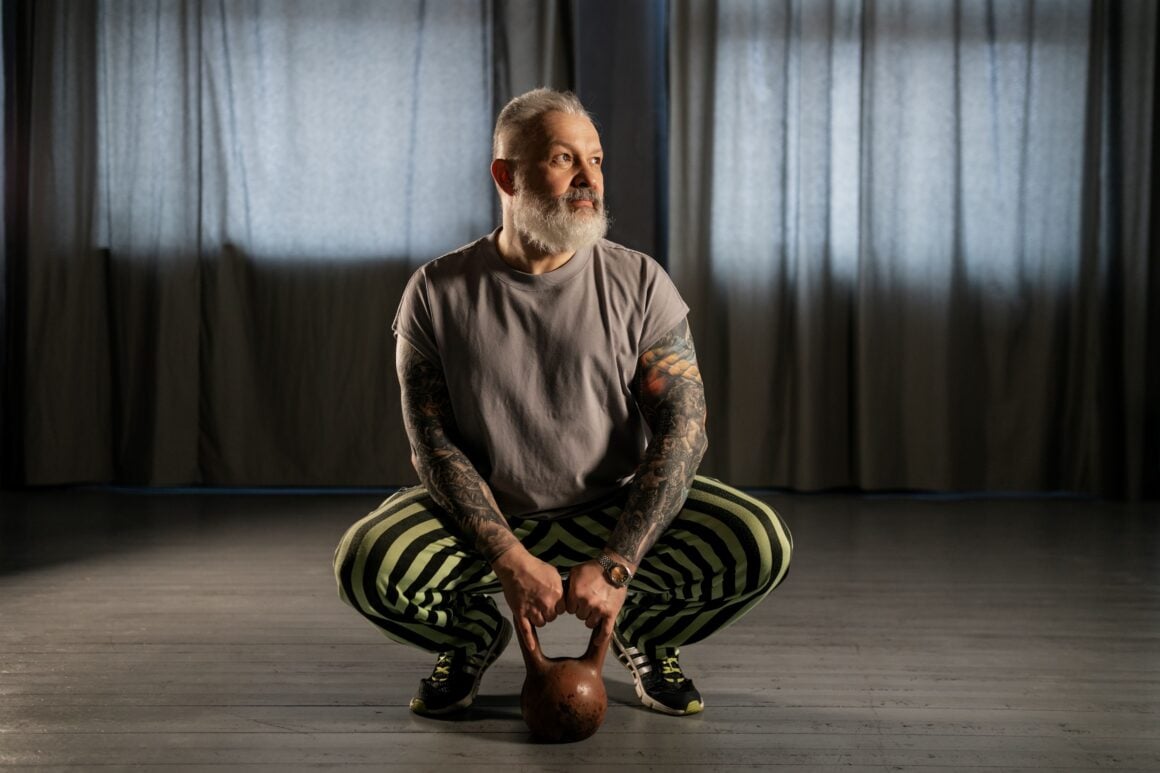

If you have been training for years, you tend to notice the change before any blood test confirms it. Weights that used to move cleanly feel heavier. Recovery between sessions stretches out. The session you would have shrugged off at 30 now leaves you flat for two days. And the drive, the thing that got you to pick up the kettlebell in the first place, flickers in a way it never used to. For a lot of men past 40, this is the lived experience of declining testosterone, and it is one of the reasons testosterone replacement therapy has moved from the fringes of the gym into mainstream conversation.
It is also one of the most misunderstood topics in fitness. TRT is a legitimate medical treatment for a real condition, with genuine benefits, genuine caveats, and a set of trade-offs that most articles about it skip entirely. If you train and you are wondering whether it applies to you, this covers what the evidence supports, what it does not, and the questions worth answering before you go anywhere near a prescription.
What Actually Happens to Testosterone With Age
Testosterone tends to peak in early adulthood and then decline gradually, with the slide becoming noticeable for many men around 40. That decline is part of why lean mass, strength and recovery capacity slip over the decades. The drop is rarely dramatic year to year, but it compounds.
Here is the distinction that matters. A normal age-related decline is not the same thing as clinical testosterone deficiency, or hypogonadism. The evidence supports TRT most clearly in men with biochemically confirmed low testosterone, typically defined as total testosterone below around 300 ng/dL on at least two early-morning measurements, alongside symptoms that match.¹ Guideline thresholds vary between roughly 280 and 350 ng/dL depending on which body you follow.² Feeling flat at 45 is not, on its own, a diagnosis. The number and the symptoms have to line up.
Prevalence gives useful perspective. Among men aged 40 to 49, somewhere between 6% and 12% have biochemically low testosterone.² So the large majority of men in that age bracket who feel worse than they used to are feeling worse for reasons that testosterone will not fix.
This matters because the secondary form of low testosterone is frequently tied to obesity, metabolic syndrome and sleep apnoea.² For a lot of men, addressing body composition, sleep and training structure does more than any prescription would, and it does it without committing to anything.
Fix the Obvious Things First
Before the blood test, be honest about the inputs.
Sleep is the big one, and sleep apnoea specifically is both common in this age group and a known contributor to low testosterone. Body fat matters because adipose tissue converts testosterone to oestrogen, so carrying more of it drives the number down. Alcohol, chronic underfeeding and running a large calorie deficit for months all suppress it too.
Then there is the training itself. Plenty of men past 40 who feel flat are not hormonally deficient, they are under-recovered. If your sessions have crept up in frequency or intensity while your sleep has crept down, the fatigue and the flat mood are doing exactly what they are supposed to do. The piece on kettlebells and overtraining covers what that looks like and how to tell it apart from something else.
It is also worth checking your expectations against what is actually achievable at this age rather than against what you managed at 25. There is a lot of published advice telling people over 40 to train lighter and slower, and it does not hold up. The guide to starting kettlebell training over 50 goes through the evidence on that, and the Older and Stronger archive is full of people in their sixties and seventies doing things most people half their age cannot.
What the Evidence Says TRT Does
For men who genuinely qualify, the benefits are reasonably well documented. A 2025 narrative review of TRT in men aged 50 and above found consistent improvements across several domains, with most of them concentrated in men whose baseline levels were below 300 ng/dL:³
- Lean body mass and strength. Restoring testosterone to a healthy range increases lean mass and reduces fat mass.
- Bone mineral density. Testosterone supports bone, which becomes more valuable as fracture risk climbs.
- Metabolic markers. Improvements in insulin sensitivity and waist circumference, particularly when combined with structured lifestyle change.
- Drive and mood. Improvements in libido are the most consistent finding. Modest improvements in low mood and vitality are reported, though TRT is not a treatment for clinical depression.
Where the Training Claim Needs Care
You will often read that testosterone and training multiply each other, usually citing a 2019 study in which older men on testosterone gained more muscle from resistance training than those on placebo.⁴
That study is real and the result is real, but read what it actually was. Eighteen men aged 65 to 75, nine per group, over six weeks. The participants were non-hypogonadal, meaning their testosterone was normal to begin with. And the intervention was Sustanon 250 mg by injection every two weeks, which is an anabolic dose rather than a replacement dose.
So it demonstrates that giving extra testosterone to healthy older men amplifies training adaptations. That is a finding about anabolic steroid use, not about replacement therapy in deficient men, and it is a small and short study either way.
Pulling in the other direction, a meta-analysis found that once testosterone sits within the normal physiological range, neither acute elevation nor baseline concentration appears to drive resistance training adaptations in older men. Men with the lowest testosterone in that analysis still gained strength and muscle from training.⁵
The claim that survives all this is narrower than the one usually made. If you are deficient and you correct it, you will likely train and recover better. Adding testosterone when you are not deficient is performance enhancement, which carries a different risk profile and is a separate conversation.
The Safety Picture, Accurately
For years TRT carried a cloud of cardiovascular and prostate concern. The contemporary evidence is more reassuring, with conditions attached.
The TRAVERSE trial is the largest piece of that evidence. It enrolled 5,246 men aged 45 to 80 who had pre-existing cardiovascular disease or a high risk of it, who reported symptoms of hypogonadism, and who had two fasting testosterone readings below 300 ng/dL. Over a mean follow-up of 22 months, testosterone was non-inferior to placebo for major adverse cardiac events.⁶
Three things about that deserve to survive the summary.
The population was specific. These were symptomatic, biochemically deficient men at elevated cardiovascular risk, treated with monitored doses. The trial’s lead investigator said publicly that the results do not apply to athletes taking high doses or to men without low testosterone.
The follow-up was under two years. It is reassurance over the typical duration of treatment, not over a lifetime of it.
And it was not entirely clean. The testosterone group had a higher incidence of atrial fibrillation, acute kidney injury and pulmonary embolism.⁶
Beyond TRAVERSE, the most common dose-related side effect is erythrocytosis, a rise in red cell count that thickens the blood, with long-acting intramuscular formulations carrying the highest risk.² That is why haematocrit monitoring is not optional. Regulators have also specifically cautioned against the growing off-label use of testosterone in men who do not have diagnosed deficiency.¹
The Part Most Articles Leave Out
Two things that rarely appear in fitness coverage of TRT, both of which matter more than anything above if they apply to you.
It will suppress your fertility. Exogenous testosterone acts on the hypothalamic-pituitary-gonadal axis through negative feedback, lowering LH and FSH. That drops intratesticular testosterone, which is what sperm production depends on. The result is impaired spermatogenesis, testicular atrophy, and in many men azoospermia, meaning no sperm in the ejaculate at all.⁷ This happens despite your blood testosterone reading as normal.
Recovery after stopping is usual but slow, and longer duration of use is associated with slower recovery.⁷ If you might want children, this is a conversation to have with a clinician before the first dose, not after. There are treatments that raise testosterone without shutting the axis down, and there is the option of banking sperm first. Neither option is available once you have already started.
If fertility is a live concern, the useful thing to know is that testosterone is not the only option on the table. Alongside the standard preparations, UK clinic Voy lists hCG and clomifene citrate among its testosterone replacement therapy options, and both work by stimulating your own production rather than replacing it. Availability and regulation differ by country, so treat that as an illustration of what to ask your own clinician about rather than a route.
It is usually not a short course. Once you are on it, your own production is suppressed, and stopping means the symptoms return, often more sharply than they arrived. Practically, starting TRT for age-related decline is close to a decision to stay on it. For men who genuinely need it that is a reasonable trade, and it is a good reason to be certain before starting.
If You Think It Might Apply to You
The sensible path is unglamorous.
If your strength, recovery and drive have genuinely fallen off, and the usual suspects are handled, then an assessment is warranted. That means early-morning blood tests, repeated to confirm, interpreted alongside your symptoms by a clinician rather than self-diagnosed after a bad fortnight.
Ask about fertility before anything else if that is live for you. Ask what the monitoring schedule is, because red cell count, prostate markers and testosterone levels all need checking on an ongoing basis. Ask what the exit looks like if you want to stop.
And if you do start, keep training. The men who get the most from TRT are the ones who were already training and use it to restore what age took away.
The Bottom Line
TRT is not magic and it is not for everyone who feels older than they used to. For the subset of men past 40 with genuinely low testosterone and matching symptoms, it can restore strength, recovery and drive, and it works best alongside consistent resistance training rather than in place of it.
For everyone else, and that is most men in this age bracket, the honest answer is that sleep, body composition, alcohol and training structure account for far more of how you feel than your hormone panel does. Those cost nothing, they are reversible, and they account for a great deal.
Frequently Asked Questions
Does testosterone naturally decline with age?
Yes. It peaks in early adulthood and declines gradually, becoming noticeable for many men around 40. A normal age-related decline is not the same as clinical deficiency, which requires confirmed low blood levels on two early-morning tests plus matching symptoms.
Who actually benefits from TRT?
Men with biochemically confirmed low testosterone, generally below around 300 ng/dL on two early-morning tests, alongside symptoms. Only about 6% to 12% of men aged 40 to 49 fall into that category. Men whose low levels are driven by obesity, sleep apnoea or lifestyle may improve them by addressing those first.
Will TRT build muscle on its own?
In deficient men it increases lean mass and reduces fat. The often-quoted study showing it amplifies training gains used men who were not deficient and an anabolic dose of injected Sustanon, so it does not describe replacement therapy. Within the normal range, testosterone does not appear to drive training adaptations.
Is TRT safe for the heart?
The TRAVERSE trial found testosterone non-inferior to placebo for major adverse cardiac events over a mean of 22 months, in men with confirmed deficiency and existing cardiovascular risk. The testosterone group had higher rates of atrial fibrillation, acute kidney injury and pulmonary embolism. Erythrocytosis is the most common side effect, so monitoring is essential.
Does TRT affect fertility?
Yes. It suppresses the hormonal signals that drive sperm production, commonly causing azoospermia, and recovery after stopping is slow and not guaranteed. If future fertility matters to you, raise it before starting.
Can I come off it later?
Your own production is suppressed while you are on it, so stopping usually brings the symptoms back. Treat starting as a long-term commitment rather than a trial.
Can I just take testosterone to feel younger?
Testosterone is not approved for simple age-related decline, and regulators have cautioned against off-label use in men without diagnosed deficiency.
References
- Bhasin S. Testosterone replacement in aging men: an evidence-based patient-centric perspective. J Clin Invest. 2021;131(4):e146607. https://doi.org/10.1172/JCI146607
- Canal de Velasco LM, González Flores JE. Testosterone therapy in men in their 40s: a narrative review of indications, outcomes, and mid-term safety. Cureus. 2025;17:e92778. https://doi.org/10.7759/cureus.92778
- Canal de Velasco LM, González Flores JE, Morales Arteaga JL. Testosterone replacement therapy in men aged 50 and above: a narrative review. Cureus. 2025;17:e92538. https://doi.org/10.7759/cureus.92538
- Testosterone therapy induces molecular programming augmenting physiological adaptations to resistance exercise in older men. J Cachexia Sarcopenia Muscle. 2019. https://doi.org/10.1002/jcsm.12472
- Short-term exercise training inconsistently influences basal testosterone in older men: a systematic review and meta-analysis. https://pmc.ncbi.nlm.nih.gov/articles/PMC6339914/
- Lincoff AM, Bhasin S, Flevaris P, et al. Cardiovascular safety of testosterone-replacement therapy. N Engl J Med. 2023;389(2):107–117. https://doi.org/10.1056/NEJMoa2215025
- Desai A, Yassin M, Cayetano A, Tharakan T, Jayasena CN, Minhas S. Understanding and managing the suppression of spermatogenesis caused by testosterone replacement therapy (TRT) and anabolic-androgenic steroids (AAS). Ther Adv Urol. 2022. https://doi.org/10.1177/17562872221105017
- Workouts
- Courses
- Certifications
- Coaches
- Live feed


