
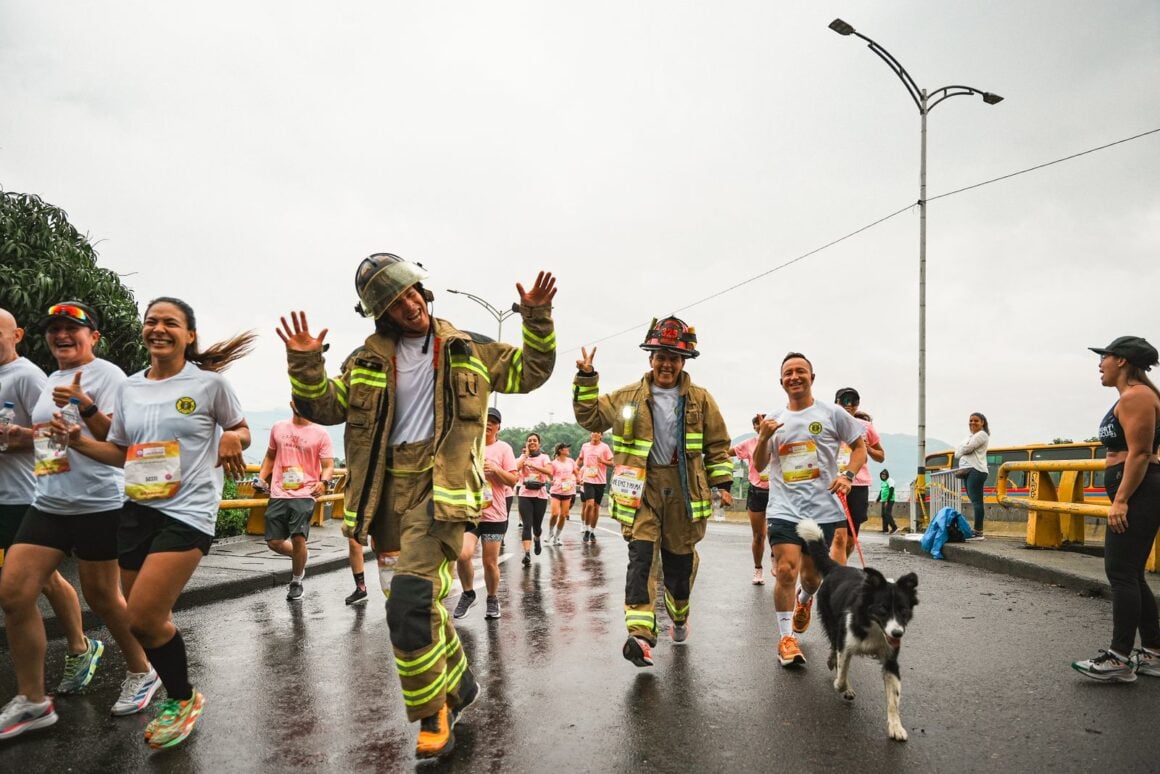

Most people don’t need convincing that exercise is good for them. They know running can improve cardiovascular health, that regular activity helps with stress, and that staying active matters for long-term health. Knowing all of that still doesn’t make most people want to get out of bed on a Saturday morning and run three miles.
A charity 5K adds another reason. Participants might be supporting a friend, raising money for medical research, helping a local organization, or backing a cause that has affected someone they love. The distance is still 3.1 miles and the effort is the same, but the reason for making that effort has changed. Research on exercise motivation and on charity sport events suggests that change matters.
Knowing Exercise Is Good for You Isn’t Always Enough
Recognizing the benefits of exercise and enjoying it are different things. Someone might start running because a doctor recommended it, to lose weight, or out of concern for their health. Those are legitimate reasons to begin, and none of them makes running enjoyable.
A systematic review in the International Journal of Behavioral Nutrition and Physical Activity looked at 66 studies of exercise motivation through the lens of self-determination theory.¹ More autonomous forms of motivation, the kind that come from what a person values or enjoys, were consistently linked with exercising more. The review also drew a distinction that matters here. Valuing the outcomes of exercise was most relevant to getting started, while enjoying the activity itself was more consistently linked with keeping it up.
That helps explain why being told to exercise for your health often isn’t enough. A person can understand the benefits of running and still find it unrewarding. When running is connected to something they already care about, they have another reason to take part. A charitable reason won’t necessarily turn into a lasting habit on its own, but it can be what gets someone started.
What Motivates People to Run for Charity?
Charity races combine motivations that usually sit apart. In one event, a participant can work toward a fitness goal, spend time with friends, test themselves physically, and support a cause.
For many participants, the cause carries real weight. Researchers surveyed runners in the Norfolk Freedom Half Marathon in Virginia, a cause-related event with a military focus, one week after the race. Of 1,372 registered runners, 557 responded.² Of the factors the study measured, including how strongly people identified as runners or with the military, charitable motives were the dominant influence on whether they intended to keep supporting the cause and the event.
That finding is about intentions toward the event and its cause; the study didn’t measure whether charity runners went on to exercise more. For many people at these events, the charitable purpose is a central reason for being there.
The Social Side of Exercise Matters, Too
Running alone depends mostly on your own motivation. You decide when to start, how far to go, and whether to keep going when it gets uncomfortable.
A community event brings other people into it. Participants arrive with friends, family, coworkers or members of a local group. They recognize faces along the route, encourage someone who is struggling, and celebrate together at the end. Exercise starts to feel like something shared.
Some research points in the same direction, with limits. A 2018 systematic review of 35 studies looked at how the behavior of exercise professionals affects whether the people they work with keep exercising.³ When instructors supported people’s sense of choice, participants’ basic psychological needs (autonomy, competence and connection with others) were better met, and more self-determined exercisers tended to persist longer. The review looked at instructors rather than fellow participants, most of its studies captured a single point in time, and the authors called for more long-term research. It supports the general point that encouragement helps people keep exercising. It didn’t study race-day crowds.
Community events still offer chances for connection that solo routines don’t. Someone who dislikes running alone may enjoy an organized event. Another person may value a walking group or the accountability of training for a race with friends.
Does Running for Charity Improve Well-Being?
A 2026 study in European Sport Management Quarterly followed runners in the 2024 Reykjavík Marathon, an event with distances from a 3 km fun run to the full marathon.⁴ The researchers measured well-being before and after the race, including positive emotion, engagement, relationships, meaning and accomplishment.
Runners overall reported more positive emotion and a stronger sense of accomplishment after the event. The finding most relevant here concerns the charity runners. One of the study’s authors, summarizing the results, reports that only the runners who ran for a charity showed a significant increase in engagement and interest, and that they more often described the race as meaningful.⁵
The study has limits. It looked at one event and at well-being shortly afterward, so it can’t show that every charity race has the same effect, or that the gains last for months. It does suggest that running for a cause adds something to the experience beyond the run itself.
Why the 5K Distance Works for Community Events
At 3.1 miles, a 5K is long enough to be a real challenge for someone who hasn’t exercised regularly and short enough that many people can walk it. A marathon needs months of preparation, and even a half marathon can intimidate someone who has never entered a race. A community 5K can take a much wider range of people, especially when organizers offer running and walking options.
The free weekly timed 5Ks known as parkrun show how wide that range can be. A survey of 7,308 parkrun participants found that a quarter described themselves as non-runners when they registered. That group included a higher share of women, of people who were overweight or obese, and of people with a limiting disability than the sample as a whole. They also reported more health benefits and made the biggest improvement in their 5K times.⁶
An experienced runner might use a charity 5K to test their pace. Someone returning after a long break might alternate walking and jogging, and someone else might walk the whole distance with family. All three support the same cause with different goals.
For people who want to run rather than walk, preparing means building endurance, finding a manageable pace, and becoming aware of how they move. Cavemantraining™ covers movement and technique in its article on running more naturally.
Someone who has been sedentary for a long time may still need to build up gradually, and anyone with a relevant medical condition should get professional advice first. Even so, the option to walk opens a 5K to people a longer race would leave out, which matters to charities whose aim is to bring people together.
Can One Charity Race Lead to a Lasting Exercise Habit?
A charity race gives people a clear target. Someone with no interest in running might sign up because they care about the cause, start walking a few evenings a week, build their distance, and finish the event.
The question is what happens the following Monday. Once the race is over, that target is gone, and unless the person has found other reasons to stay active, the routine may not continue.
This fits the motivation research above. Personally meaningful goals help people start, and enjoyment matters more for keeping going.¹ Someone training for a charity race might discover they like early walks, running with friends, or watching their endurance improve, and those can keep them going after the event.
Others will find they don’t enjoy running. The race can still have been worthwhile if it got them moving and pointed them toward something they will keep doing.
What Happens After the Race?
A useful step after finishing is to work out which parts you enjoyed. The training? Being outdoors? Exercising with friends? Working toward a goal? Finishing something that once seemed out of reach?
The answer points to what comes next. Someone who enjoyed the company might join a walking or running group. Someone who liked having a target might enter another event. Others may want a different challenge, such as cycling, swimming, resistance training or kettlebell workouts.
The CDC recommends that adults get at least 150 minutes of moderate-intensity aerobic activity a week, or 75 minutes of vigorous activity, plus muscle-strengthening activity on at least two days.⁷ Plenty of combinations meet that. Someone who enjoys walking could keep walking and add two strength sessions a week. A new runner could keep running and add strength work around it.
That strength work has a benefit beyond meeting the guideline. A meta-analysis of 25 randomized trials with more than 26,000 participants found that strength training reduced sports injuries to less than a third, while stretching had no measurable effect.⁸ The trials covered a range of sports rather than running alone, but for someone new to running who is building up their distance, it is a good reason to keep the strength days in the plan.
Kettlebells can cover both sides. They are usually associated with strength, and exercises such as swings, cleans and snatches can also be put together into conditioning work that challenges the heart and lungs, depending on a person’s experience. Cavemantraining™ explains how different exercises and workout structures affect conditioning in its article on kettlebell cardio exercises.
When the Cause Matters More Than the Finish Line
Charity races also connect physical activity to problems that have little to do with fitness. Some raise money for cancer research, others for children’s hospitals, veterans, local schools or families in financial hardship. The cause gives people a reason to care about the event beyond their finishing time.
The Transform1 5K Walk and Run in St. Petersburg, Florida, is one example. It raises money for Transform1, an organization working to combat child trafficking and to care for children rescued from exploitation in the Dominican Republic, and it welcomes walkers as well as runners. Like many community fundraisers, it reaches beyond the people on the course. Local residents and businesses can support it through donations and sponsorship without taking part on the day.
Inbound Suits, a St. Petersburg marketing agency, is one of those businesses, and its write-up on supporting the Transform1 5K gives the 2026 race date (Saturday, November 21), the venue, and links to register or donate. For someone who cares about a mission like that, getting involved may have little to do with running. They might not mind whether they finish in 25 minutes or 45, and they may not think of themselves as runners at all. The event gives them a way to contribute.
That is part of why charity events appeal to people whose main interest isn’t athletic. They offer a way into physical activity without making fitness the main attraction, and they give others a way to contribute even if they never plan to run.
The Finish Line Isn’t the Only Measure of Success
Running events are easy to judge by numbers: how many people registered, how fast they finished, and how much money was raised. Those figures matter to organizers, but they miss much of what participants take away.
Someone might complete their first organized walk after years of inactivity. Another might find they prefer exercising with friends to working out alone. A family might start walking together after a community event. None of this is guaranteed, and not every participant will experience it.
The research points to several influences on exercise motivation: personal values, enjoyment, the people around you, and the meaning attached to an activity. Charity races bring several of those together in an accessible format. If the event helps someone find a form of exercise they enjoy, its effect can last well beyond race day.
References
- Teixeira PJ, Carraça EV, Markland D, Silva MN, Ryan RM. Exercise, physical activity, and self-determination theory: a systematic review. Int J Behav Nutr Phys Act. 2012;9:78. https://doi.org/10.1186/1479-5868-9-78
- Gomez E, Hill E, Ridinger L, Shiparo S. An examination of motivations, attitudes and charitable intentions for running in a charity event. J Amateur Sport. 2021;7(2). https://doi.org/10.17161/jas.v7i2.14756
- Rodrigues F, Bento T, Cid L, Neiva HP, Teixeira D, Moutão J, Marinho DA, Monteiro D. Can interpersonal behavior influence the persistence and adherence to physical exercise practice in adults? A systematic review. Front Psychol. 2018;9:2141. https://doi.org/10.3389/fpsyg.2018.02141
- An B, Gisladottir T, Sato M. The effect of sport event participation on well-being: the role of running for charity. Eur Sport Manag Q. 2026. https://doi.org/10.1080/16184742.2026.2642175
- Gísladóttir ÞL. Hvaða áhrif hefur það á hlaupara að hlaupa fyrir góðan málstað? [What effect does running for a good cause have on runners?] Vísir. 2026. https://www.visir.is/g/20262917895d/hvada-ahrif-hefur-thad-a-hlaupara-ad-hlaupa-fyrir-godan-malstad-
- Stevinson C, Hickson M. Exploring the public health potential of a mass community participation event. J Public Health. 2014;36(2):268–274. https://doi.org/10.1093/pubmed/fdt082
- Centers for Disease Control and Prevention. Adult activity: an overview. https://www.cdc.gov/physical-activity-basics/guidelines/adults.html
- Lauersen JB, Bertelsen DM, Andersen LB. The effectiveness of exercise interventions to prevent sports injuries: a systematic review and meta-analysis of randomised controlled trials. Br J Sports Med. 2014;48(11):871–877. https://doi.org/10.1136/bjsports-2013-092538
- Workouts
- Courses
- Certifications
- Coaches
- Live feed


