

Key takeaways
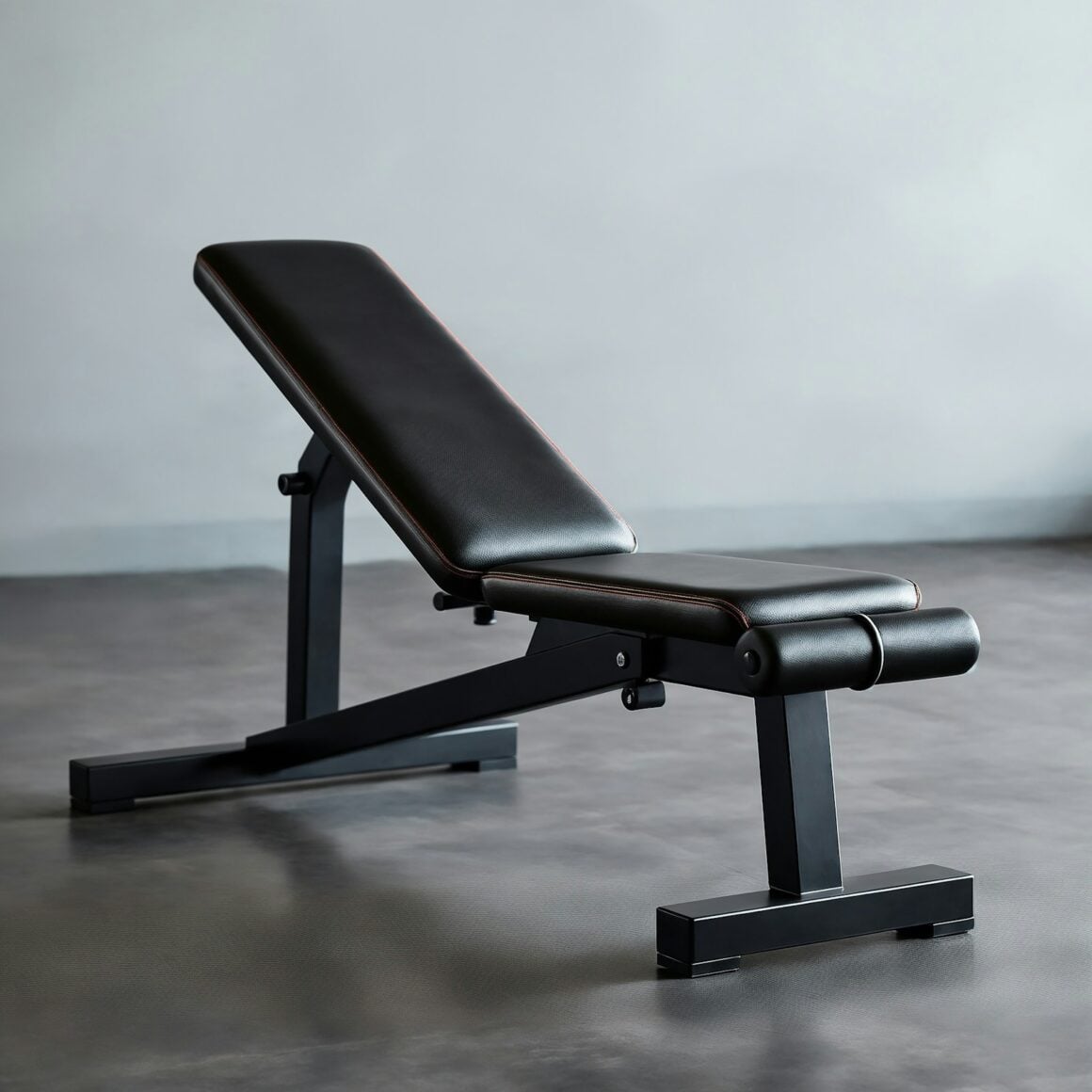
- You can get strong with kettlebells without a bench. A good one makes supported presses, rows and split squats easier to load.
- Supporting your body on a bench removes much of the balance demand, which lets you put more effort into the exercise itself.
- The floor press works without a bench. A bench adds range of motion and incline options.
- Choose a bench on stability, pad range, rated capacity and footprint. The number of angles matters less.
- A pad that runs from slightly declined to near vertical covers every exercise in this guide.
- A modular bench suits small spaces because you store attachments instead of full machines.
Short answer: no, you don’t need an adjustable weight bench to get strong with kettlebells. A kettlebell, a floor and some patience will take you a long way. A bench does change what you can load, and that’s worth knowing before you outgrow the floor press.
Most kettlebell exercises are done standing, whether they are ballistic, like swings, cleans and snatches, or grinds, like presses and squats. Staying balanced while the kettlebell moves is part of what they train. Sooner or later, though, you may want to push, pull or squat hard without spending part of your effort on staying upright. Supported positions do that.
What an Adjustable Weight Bench Adds to Kettlebell Training
A bench adds stability, angles, and something solid to brace against. Those three things open up exercises that are awkward or impossible on the floor.
Stability affects how much force you can produce. Research on unstable training shows the general principle: a position stand from the Canadian Society for Exercise Physiology notes that adding unstable bases to resistance exercises can decrease force, power, velocity, and range of motion, and does not recommend them as the main training method for athletic conditioning.¹ A bench works in the other direction, giving your body a fixed base so more of your effort goes into moving the load.
On the floor, a press stops when your elbows touch the ground. On a bench, your upper arms can travel below your torso, so the chest and shoulders work through a longer range. Whether that extra range builds more muscle in the upper body is less clear. A systematic review found that full range of motion benefits muscle growth in the legs, but that the research on the upper body is limited and conflicting.² Tilt the pad and the same press shifts toward a different part of the chest and shoulder. Lie face down on an incline and you can row without your torso swinging.
Plenty of people start with a basic folding bench. Others choose a modular adjustable bench that accepts attachments. Whichever you pick, load it with a kettlebell that challenges you. This site’s guide to what kettlebell to buy covers choosing the weight.
Three Supported Exercises to Try With the Kettlebells You Own
These three need a bench and one or two kettlebells. Each removes some of the balance demand so you can focus on the working muscles.
- Chest-supported row: Set the pad to a low incline, lie face down with a kettlebell hanging on each side, and row toward your ribs. With your chest supported, your lower back no longer has to hold a hinged position, so your effort goes into the pull.
- Incline kettlebell press: Raise the pad to a moderate incline and press the kettlebells from shoulder height. The upper chest and front shoulders do more of the work as the incline rises.
- Rear-foot-elevated split squat: Rest your back foot on the flat pad and hold a kettlebell in the goblet position at your chest. The bench holds your back foot, so you can load the front leg without wobbling.
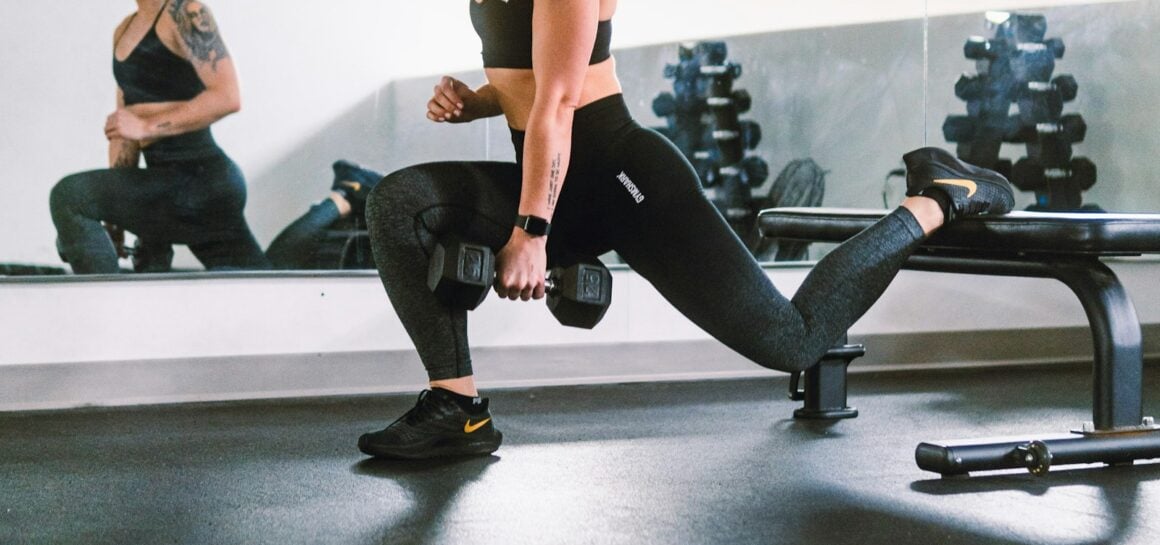
Photo: Matthew Sichkaruk on Unsplash (Unsplash License).
Start lighter than your swing weight and add load once the positions feel solid. If you are new to kettlebells, everything for a kettlebell beginner is a good place to start. If you’re building a home setup from scratch, these ideas for strength training at home cover the basics.
How to Choose an Adjustable Weight Bench for a Home Gym
Judge a bench on four things: stability, pad range, rated capacity and footprint. The number of angles matters less than any of them.
| Feature | What to check | Why it matters for kettlebell training |
|---|---|---|
| Stability | No wobble or flex under heavy kettlebells, and a solid join between seat and back pad | A bench that moves ruins supported exercises |
| Pad range | Flat, incline and decline (FID) with a near-vertical top setting | Low angles suit rows, high angles suit shoulder presses |
| Rated capacity | A rating well above your bodyweight plus the load | Headroom as you get stronger |
| Footprint | Length, weight, and a handle or wheels for moving it | Small spaces need a bench you can shift easily |
Pad angle changes which muscles do the most work. In a study of 30 trained adults bench pressing a barbell at 60% of their one-rep max, the upper part of the chest was most active at a 30° incline, the middle and lower chest were most active flat, and inclines above 45° shifted the work toward the front of the shoulder.³ The study used a barbell, but the same angles are a sensible starting point for kettlebell presses.
Check how the bench moves and stores too. In a shared garage or spare room, the bench you can shift easily is the one you’ll actually use.
When One Bench With Attachments Beats a Corner Full of Machines
If floor space is the limit, a modular bench lets you store small attachments instead of full machines.
The Apex Ecosystem works this way. Every attachment connects to the Apex Adjustable Bench, so the bench is the base and the rest is optional. The bench has an 11-gauge steel frame, weighs 105 lb, is rated to 1,000 lb, and has a back pad with 17 positions from -10° to 85°.
Three of the attachments suit kettlebell training. The Stryker Pad is a utility pad for rows and overhead pressing. The Landmine adds front squats, upper-body work and explosive exercises. The Power Tower adds dips, pull-ups and hanging leg raises.
The attachments only fit the Apex bench, so you’re committing to one system. You can start with the bench and add pieces later, which keeps the first purchase simple. Apex’s own review of the bench and its attachments goes through each piece and is upfront about the limits, including that rows on the Stryker Pad should be done with your feet on the floor or the unit can tip. That is worth knowing before you load it with heavy kettlebells.
Adjustable Weight Bench FAQs
Do I need a bench for kettlebell training?
No. Swings, squats, cleans and floor presses all work without one. A bench becomes useful when you want supported rows, incline presses or split squats you can load more heavily.
What angle should I set an adjustable weight bench to?
It depends on the exercise. Use flat for presses that target the whole chest, around 30° for the upper chest, a low incline for chest-supported rows, and a steep angle for shoulder presses. Adjust in small steps until the position feels stable.
Is a kettlebell bench press better than a dumbbell press?
Neither is better across the board. The difference is where the weight sits. A kettlebell’s mass sits off to one side of the handle, resting against the back of the forearm, so it balances differently in your hand. Choose by what you own and how each one feels in the position.
Can I use a flat bench instead?
For presses and split squats, yes. For chest-supported rows and incline presses you need an adjustable pad, which is the main reason many people upgrade.
References
- Behm DG, Drinkwater EJ, Willardson JM, Cowley PM. Canadian Society for Exercise Physiology position stand: the use of instability to train the core in athletic and nonathletic conditioning. Appl Physiol Nutr Metab. 2010;35(1):109–112. https://doi.org/10.1139/H09-128
- Schoenfeld BJ, Grgic J. Effects of range of motion on muscle development during resistance training interventions: a systematic review. SAGE Open Med. 2020;8:2050312120901559. https://doi.org/10.1177/2050312120901559
- Rodríguez-Ridao D, Antequera-Vique JA, Martín-Fuentes I, Muyor JM. Effect of five bench inclinations on the electromyographic activity of the pectoralis major, anterior deltoid, and triceps brachii during the bench press exercise. Int J Environ Res Public Health. 2020;17(19):7339. https://doi.org/10.3390/ijerph17197339
- Workouts
- Courses
- Certifications
- Coaches
- Live feed


