
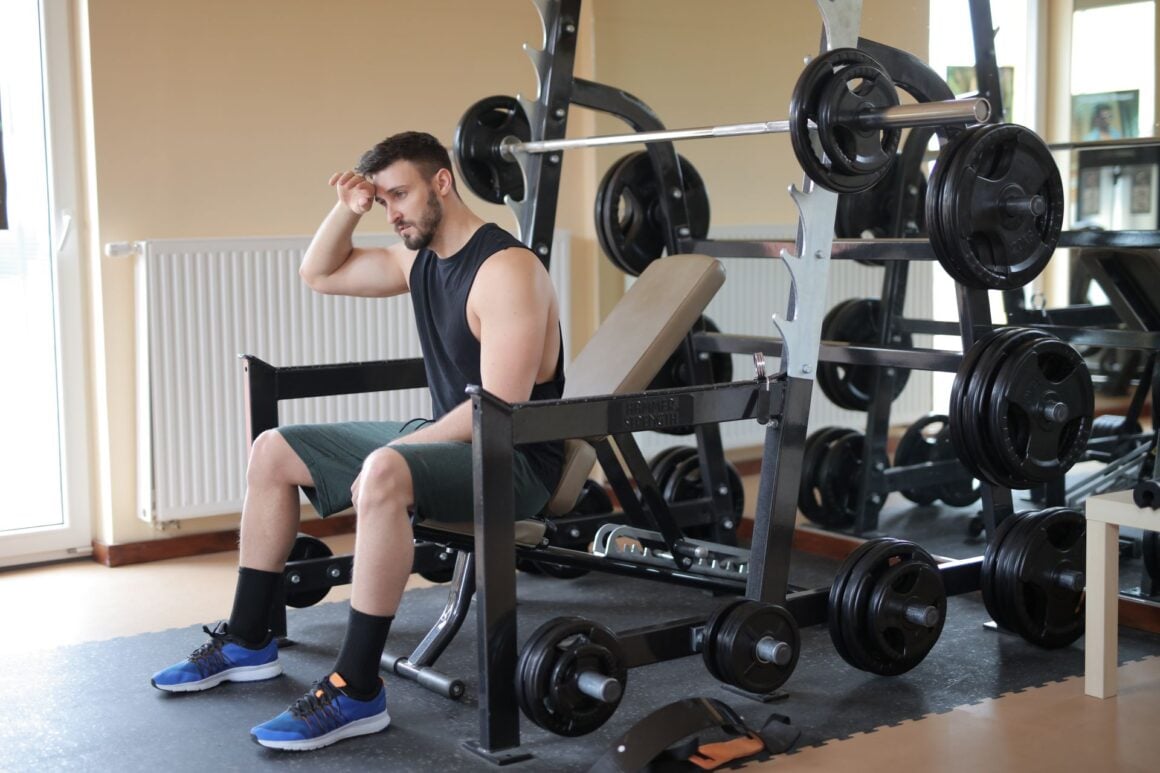

Walk into most gyms before 7am and you’ll see the same ritual. A scoop of pre-workout, a can of something fizzy, or a double espresso downed in the car park. For a lot of people, training and stimulants have become so tied together that a session without one feels impossible.
That’s usually harmless. Caffeine is the most widely used performance aid there is, and in sensible amounts most people tolerate it well. Some people take it further, stacking pre-workouts, energy drinks and coffee, or reaching for prescription stimulants they were never prescribed to get through long days and hard sessions. When that stops, by choice or not, the crash can knock training off course for weeks.
Why stimulants and training go together
The appeal is obvious. Stimulants make you feel more alert, more motivated and less aware of fatigue. On a heavy day that can feel like the difference between a good session and a bad one, and the effect is real. The International Society of Sports Nutrition’s position stand on caffeine concludes that doses of 3 to 6 milligrams per kilogram of body weight improve exercise performance, with small to moderate gains in muscular endurance, strength, sprinting and jumping.¹
The problem is the slide upward. Doses around 9 milligrams per kilogram bring a high rate of side effects and add nothing to the benefit.¹ People still get there, by adding a second scoop or a pre-workout before the pre-workout. Withdrawal explains much of that. The position stand found no consistent difference in caffeine’s performance effect between regular and occasional users,¹ but regular users feel flat without it, so the dose that once gave a lift becomes the dose that gets them back to normal.
How much caffeine is too much?
The US Food and Drug Administration gives a useful benchmark. In its consumer guidance on caffeine (current as of August 2024), it says that for healthy adults, 400 milligrams a day is not generally associated with negative effects.² That’s roughly two to three 12-ounce cups of coffee. Sensitivity varies a lot, though, and people with certain health conditions or on certain medications may need much less.
The same guidance lists signs you may be overdoing it:
- A racing heart or palpitations
- Higher blood pressure
- Trouble sleeping
- Anxiety or jitters
- An upset stomach, nausea or headache
Most pre-workout tubs list caffeine per scoop. Add that to your morning coffee and an afternoon energy drink, and it’s surprisingly easy to land well past 400 milligrams without noticing. The FDA notes that energy drinks alone typically contain between 54 and 328 milligrams per 16 fluid ounces.²
It also issues a serious warning about pure powdered and highly concentrated caffeine. Toxic effects such as seizures can follow rapid consumption of around 1,200 milligrams, which is less than half a teaspoon of the pure powder.² If you’re buying bulk caffeine powder to save money on pre-workout, that’s a risk worth taking seriously.
Cutting back: what to expect
If you decide to reduce your caffeine intake, the FDA’s advice is to do it gradually, and it notes that withdrawal isn’t considered dangerous but can be unpleasant.²
A detailed review of the research on caffeine withdrawal puts numbers on that.³ Symptoms typically start 12 to 24 hours after the last dose, peak somewhere between 20 and 51 hours, and last 2 to 9 days. Headache occurs in about half of people, and the other common symptoms are fatigue, low energy, drowsiness, and trouble concentrating. The review also found that stopping at as little as 100 milligrams a day, about one cup of coffee, is enough to bring them on.
From a training point of view, those first days often feel like your strength has vanished. What has changed is how hard everything feels: the fatigue and low energy of withdrawal raise your perception of effort, so weights feel heavier, warm-ups feel longer, and motivation dips. Give it a week or two and most people find their normal level again, often with better sleep as a bonus.
Before you change anything, it helps to know where you’re starting from. For one normal week, write down every source of caffeine: coffee, tea, pre-workout, energy drinks, fat burners, even the occasional cola. Note the time of day too. Most people are surprised, either by the total or by how late in the day they’re still taking it in.
Timing matters more than most people think. In a study where participants took 400 milligrams of caffeine at bedtime, three hours before it, or six hours before it, even the six-hour dose cut measured sleep by more than an hour, and the participants didn’t notice the loss.⁴ A pre-workout at 6pm is well inside that window, and the poor night that follows is what makes you reach for more caffeine the next morning. Breaking that loop is often the single biggest win.
A simple approach is to drop one source at a time. Halve the pre-workout scoop for a week, then cut the afternoon energy drink, then decide whether you still need the rest.
Training through the flat spell
Low energy is a reason to change how you train. Movement helps mood, and resistance training has good evidence behind it. A 2017 meta-analysis in Sports Medicine pooled 16 randomised trials and found that resistance training significantly reduced anxiety symptoms.⁵ The World Health Organization’s physical activity fact sheet (June 2024) adds that regular activity in adults reduces symptoms of depression and anxiety.⁶
What changes is the format. A few ideas that work well during a stimulant comedown:
Shorten sessions. A short 12-minute kettlebell workout can be enough to keep the habit alive on days when an hour feels impossible. Scale the weight down and stop before form slips.
Stick to exercises you already own. A flat week is no time to learn the snatch or push a new variation. Learning a movement needs a fresh system, and fatigue changes the movement you’re trying to learn. Train the exercises you can already do well, and leave anything new for a week when you have the energy for it.
Shift the focus to movement quality. Low-energy weeks are a good time to work on mobility. These kettlebell mobility exercises for beginners keep you moving without asking much of an already tired system.
Go back to the basics of safe training. Fatigue makes sloppy reps more likely, so it’s worth rereading the fundamentals of form, loading, rest and warm-ups before you pick the weights up. Cavemantraining™’s read before doing our workouts guide is a good reminder that technique comes before load.
Drop the intensity, keep the frequency. Training three times a week at a lower effort is better than skipping a week and then trying to make up for it.
Protect your sleep. Sleep is usually the first thing to improve when stimulants come down, and it’s where most of your recovery happens. Train earlier in the day if late sessions keep you awake. A regular bedtime, a dark room and a phone left outside the bedroom will do more for next week’s numbers than any supplement.
When it’s more than caffeine
Most people reading this are dealing with too much coffee and pre-workout, and the steps above will be plenty. Stimulant use in gyms and workplaces isn’t always limited to caffeine, though. Some people use prescription stimulants such as Adderall without a prescription, hoping for focus, appetite control or an edge in training. These are prescription-only medicines for good reason, and they come with real risks.
Coming off a prescription stimulant after regular misuse is a different experience from cutting back on coffee. The comedown can involve deep tiredness and very low mood, and it’s not something to manage on willpower alone. If that sounds familiar, speak to a doctor before stopping. Arrow Passage Recovery’s Adderall withdrawal timeline sets out what the first days and weeks commonly look like, from poor sleep and fatigue in the first few days to a second wave of irritability and poor concentration later in the first week, and notes that there are no approved medications for the withdrawal itself.
If you ever feel very low or have thoughts of harming yourself, get help straight away. In the US and Canada you can call or text 988, in the UK and Ireland Samaritans are on 116 123, and in Australia Lifeline is on 13 11 14. Elsewhere, call your local emergency number or crisis line.
After the crash
Once the flat spell passes, you’ll have a clearer view of what caffeine was doing for you. Some people go back to a single coffee before training and leave it there. Others find that with sleep sorted, they don’t miss the pre-workout at all. Either way, a few weeks without it will show you how much you were relying on it, and that is useful to know before the next tub.
References
- Guest NS, VanDusseldorp TA, Nelson MT, Grgic J, Schoenfeld BJ, et al. International society of sports nutrition position stand: caffeine and exercise performance. J Int Soc Sports Nutr. 2021;18:1. <https://doi.org/10.1186/s12970-020-00383-4>
- U.S. Food and Drug Administration. Spilling the beans: how much caffeine is too much? Current as of 28 August 2024. <https://www.fda.gov/consumers/consumer-updates/spilling-beans-how-much-caffeine-too-much>
- Juliano LM, Griffiths RR. A critical review of caffeine withdrawal: empirical validation of symptoms and signs, incidence, severity, and associated features. Psychopharmacology. 2004;176(1):1–29. <https://doi.org/10.1007/s00213-004-2000-x>
- Drake C, Roehrs T, Shambroom J, Roth T. Caffeine effects on sleep taken 0, 3, or 6 hours before going to bed. J Clin Sleep Med. 2013;9(11):1195–1200. <https://doi.org/10.5664/jcsm.3170>
- Gordon BR, McDowell CP, Lyons M, Herring MP. The effects of resistance exercise training on anxiety: a meta-analysis and meta-regression analysis of randomized controlled trials. Sports Med. 2017;47(12):2521–2532. <https://doi.org/10.1007/s40279-017-0769-0>
- World Health Organization. Physical activity (fact sheet, 26 June 2024). <https://www.who.int/news-room/fact-sheets/detail/physical-activity>
- Workouts
- Courses
- Certifications
- Coaches
- Live feed


